Different Dogs, Different Play: What Your Pup Loves Most
Some dogs are natural chasers. They love movement and the thrill of running after something. Others are ...

Anyone who shares their home with a dog knows they have a way of making ordinary days better. From the excited greeting at the door to the quiet moments curled up on the sofa, dogs become part of the rhythm of our lives. And when it comes to play, that rhythm looks a little different for every dog.
Rubi, my Cockapoo, has her own very particular ideas about fun. She'll chase a ball for hours but loses interest the second it stops rolling. A squeaky toy, on the other hand, gets a good ten minutes of serious attention before she moves on to something else entirely. Watching her has taught me that play isn't a one-size-fits-all thing. What lights up one dog might barely get a second glance from another.
Play Comes in Many Shapes
Think about the dogs you know. There's the one who lives for fetch, the one who'd rather wrestle a tug toy than chase anything, and the one who's happiest sniffing every inch of a new park. None of them are doing it wrong. They're simply following their own instincts.
Some dogs are natural chasers. They love movement and the thrill of running after something. Others are more into problem solving, like working out how to get a treat out of a puzzle toy. Then there are the social players, the ones who come alive when another dog is around to tumble about with.
Why Knowing Your Dog's Play Style Matters
Understanding what your dog genuinely enjoys isn't just a nice extra. It helps you meet their needs in a way that actually works. A dog who loves to sniff will get more out of a slow, scent-filled walk than a frantic game of fetch. A dog who loves to chase will be far happier with a ball than a puzzle.
It also helps you spot when something's off. If Rubi suddenly turns her nose up at her favourite toy, I know something's changed, whether it's her mood or how she's feeling. Play is a brilliant window into a dog's wellbeing.
Matching Play to Your Dog
Here are a few broad types of play and the dogs who tend to love them.
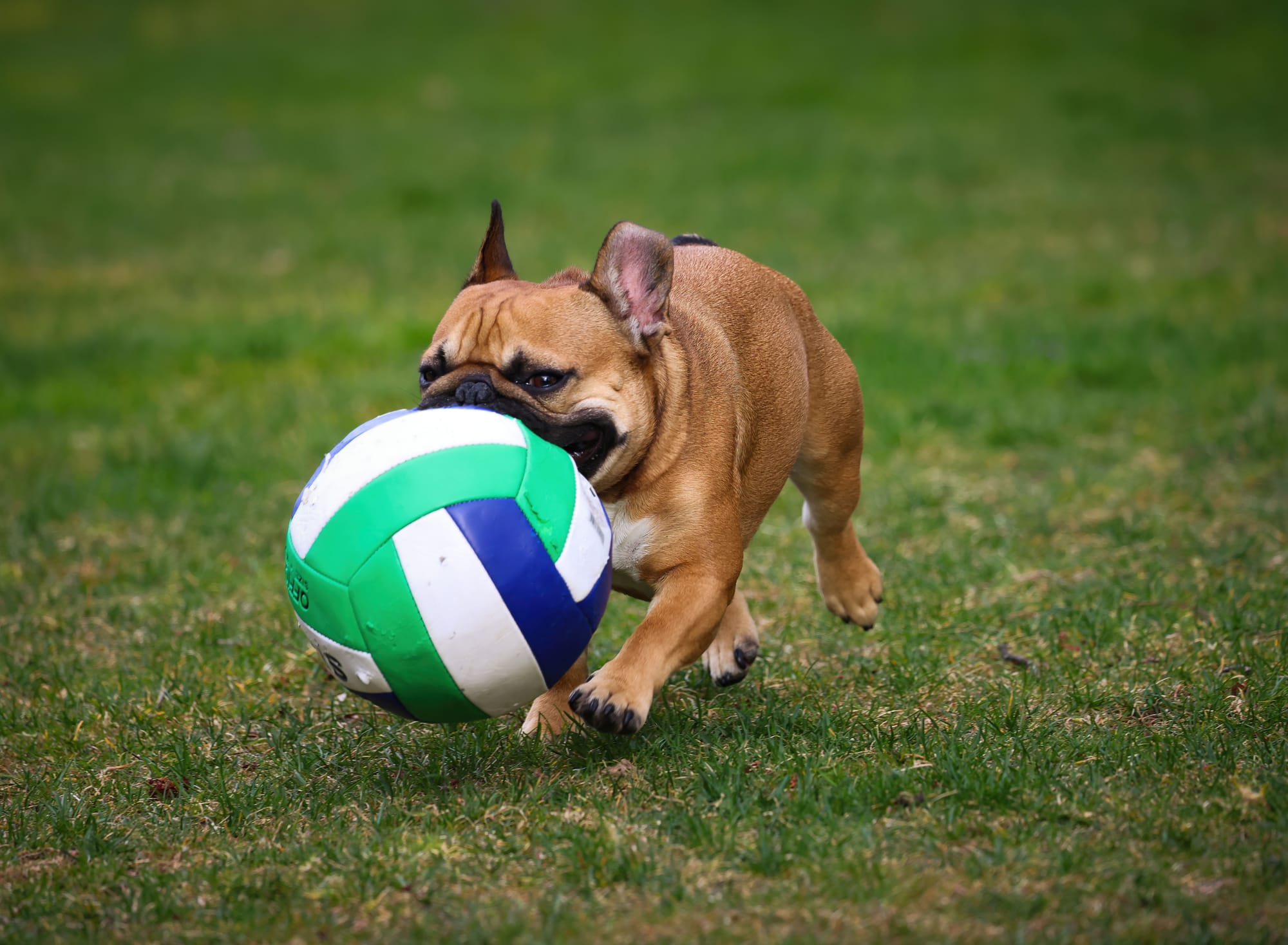
Chase and fetch. Great for dogs with plenty of energy and a strong prey drive. Ball lovers, frisbee fanatics, and dogs who simply can't resist a moving target.
Tug and wrestle. Perfect for dogs who enjoy close contact and a bit of friendly competition. Tug toys are brilliant here, though it's worth teaching a good "drop it" early on.
Sniffing and exploring. Ideal for the thinkers and the scent hounds. Scatter treats in the garden or let them take their time on walks. Some dogs find this far more tiring than a run.
Puzzle toys. Wonderful for clever dogs who like a challenge. Rubi has a treat ball she has to nudge around, and watching her work it out is half the fun.
Social play. For dogs who thrive around others. A good playmate can bring out a side of your dog you rarely see at home.
A Few Things to Keep in Mind
Not every dog wants to play the same way, and that's fine. Some prefer short bursts. Others want a long, rambling session. Learn to read the signs. A play bow means come and join in. A tucked tail or a turn away means they've had enough.
It's also worth mixing things up now and then. Even the most devoted ball chaser can get a bit bored of the same routine. A new toy or a different route on your walk can work wonders.
And remember, play doesn't have to be elaborate. Sometimes the best fun is the simplest. A cardboard box, a scrunched-up bit of paper, or ten minutes of rolling about on the floor can bring out the happiest version of your dog.
The Takeaway
Every dog has their own idea of a good time, and the joy comes from discovering it together. Watch how your dog responds to different kinds of play. Follow their lead. You'll learn far more from them than from any list, including this one.