Helping Your Dog Overcome Separation Anxiety
Separation anxiety isn't a sign of a naughty dog or bad ownership. It's a genuine panic response ...

Anyone who shares their home with a dog knows they have a way of making ordinary days better. From the excited greeting at the door to the quiet moments curled up on the sofa, dogs become part of the rhythm of our lives. But that deep bond can sometimes tip into something more challenging when we have to leave them alone.
I remember the first time I left Rubi, my Cockapoo, for more than ten minutes. I came back to find a small patch of nibbled skirting board and a very guilty-looking pup. My heart broke a little. Was she anxious? Did she think I wasn't coming back? If you're reading this, you might be dealing with similar worries.
First things first, let's be kind to ourselves. Separation anxiety isn't a sign of a naughty dog or bad ownership. It's a genuine panic response, and with patience, we can help our four-legged friends feel safer when we're not around.
What Does Separation Anxiety Actually Look Like?
Before we jump into solutions, it helps to know what we're dealing with. True separation anxiety goes beyond the odd whine when you grab your keys. You might notice:
- Destructive behaviour focused on exits, like scratching at doors or chewing window frames
- Vocalisation that starts soon after you leave and continues
- Toileting accidents in an otherwise house-trained dog
- Pacing in a fixed pattern
- Excessive panting or drooling
- Refusing to eat when you're not there, even with tasty treats left out
Rubi's tell was always the frantic tail-chasing followed by a very unimpressed neighbour. But every dog is different. The key is spotting the pattern and understanding it's fear, not mischief.
Rule Out Medical Issues First
This might sound like an odd place to start, but before assuming it's behavioural, get your vet to check your dog over. Conditions like urinary tract infections, digestive problems, or even arthritis can cause distress that looks like separation anxiety. Rubi once had a spell of destroying cushions that turned out to be a sore ear. Once that was treated, the cushion carnage stopped.
A proper check-up gives you peace of mind and ensures any plan you put in place is actually addressing the right problem.
Start Small with Departures
I learned this the hard way. Building up your dog's tolerance to being alone takes baby steps. Think of it like exposure therapy for a fear of heights, you don't start at the top of a skyscraper.
Begin by asking your dog to sit and stay while you step out of sight for just a few seconds. Return before they get anxious. Gradually increase the time, always returning while they're still calm. This builds a foundation of trust that you will always come back.
When you're ready to practice real departures, keep them short at first. Pop out to the bin, check the post, or just stand outside your front door for thirty seconds. This might feel tedious, but every small success is a step forward.
Change Your Departure Routine
Dogs are incredibly clever at reading our cues. Pick up your keys, put on your coat, grab your bag, and they know exactly what's coming. That predictable routine can trigger anxiety before you've even left.
Try doing these things at random times throughout the day when you're not going anywhere. Pick up your keys and put them back down. Put your coat on while watching telly. This stops these actions from being a guaranteed signal that you're about to disappear.
You can also create a new positive association. I started giving Rubi a special stuffed Kong with her favourite filling every time I left, and only when I left. It became a treat she actually looked forward to, replacing some of that dread with excitement.
Create a Safe Space
Your dog needs a place where they feel secure when you're not there. This might be a crate, a particular room, or even just a comfy bed in a quiet corner. The important thing is that it's somewhere they choose to go, not somewhere they're forced to stay.
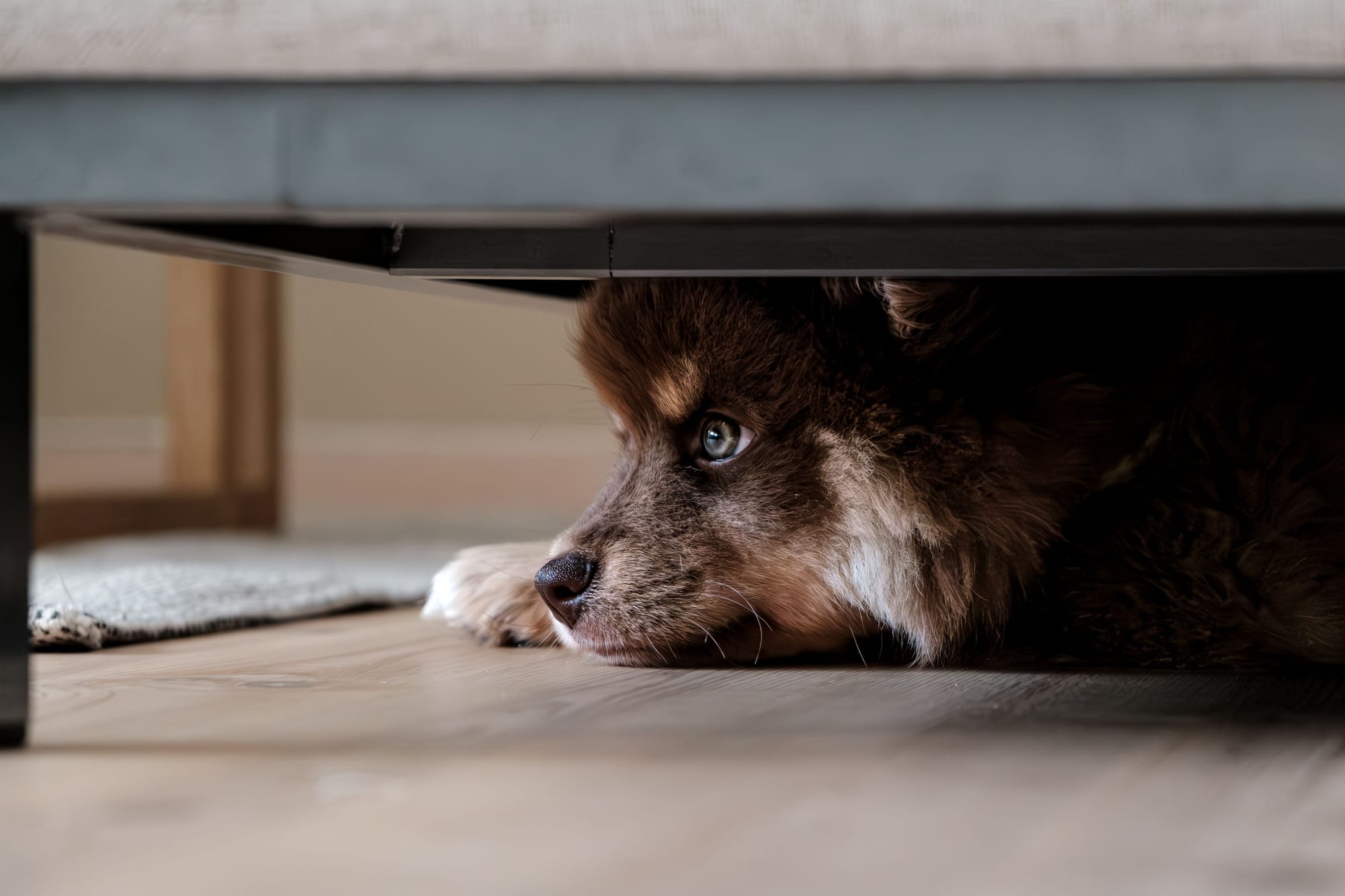
Make this space extra special. Add a worn t-shirt or blanket that smells of you. Keep their favourite toys there. Ensure it's away from busy areas or loud noises that might startle them. Rubi, for all her fluffiness, has always favoured the space under my desk. It's her little cave, and she retreats there happily when things get overwhelming.
Exercise Matters More Than You Think
A tired dog is generally a calmer dog. Making sure your dog gets good physical exercise and mental stimulation before you leave can make a significant difference. A long walk, some fetch in the garden, or a training session using their brain all help to settle them.
But don't overdo it. An over-tired dog can be just as stressed as an under-exercised one. Find a balance that suits your dog's age, breed, and fitness level. With Rubi, a good twenty-minute sniffy walk in the morning followed by some puzzle toys works wonders.
Think About What Happens When You Return
This one surprised me. I used to make a massive fuss of Rubi when I got back, scooping her up and apologising for being away. But that intense greeting actually reinforced her anxiety, it made leaving feel like this huge, emotional event.
Instead, try to make arrivals low-key. Wait until your dog is calm before giving attention. A simple, quiet "hello" and then carrying on with your normal routine helps normalise your comings and goings. Don't worry, you can still have those lovely cuddles, just save them for a few minutes later when everyone's relaxed.
Consider Doggy Daycare or a Dog Walker
Sometimes, the practical solution is the kindest one. If you work long hours or have commitments that keep you away for extended periods, it might not be fair to expect your dog to cope alone.
Doggy day care provides socialisation and constant company. A reliable dog walker can break up the day and give your dog something to look forward to. Even popping round to a friendly neighbour for an hour can make a world of difference. It's not giving up, it's adapting to your dog's needs.
When to Seek Professional Help
There's no shame in asking for help. If you've tried all the gentle approaches and your dog is still distressed, reach out to a qualified behaviourist who uses positive, force-free methods. They can create a tailored plan for your specific dog.
Some dogs benefit from calming supplements or even medication prescribed by a vet. This isn't a failure, it's a medical tool, just like using a cream for a skin condition or antibiotics for an infection. It can provide relief while you work on the behavioural aspects.
What I've Learned Along the Way
Helping Rubi with her anxiety taught me a lot about patience. There were setbacks. I remember one afternoon where she regressed completely and I felt like we were back to square one. But we took a breath, went back to basics, and kept going.
The progress wasn't a straight line, but slowly, the whining stopped. The nibbled furniture became a distant memory. Now, when I leave, she settles on her bed with her Kong and barely looks up. She still has her moments, but she knows I always come back.
If your dog is struggling right now, please don't lose heart. Every dog is different, and what works for one might not work for another. The fact that you're reading this shows you care deeply, and that care is the most powerful tool you have.
Be patient with yourself and your dog. Celebrate the small wins, like when they stay calm for an extra minute or choose their safe space willingly. You're not alone in this, and with time and consistency, you'll find what works for your family.
After all, the love we share with our dogs is worth every bit of effort. And when you see that relaxed, happy face when you return, you'll know it was all worth it.