How Talking Changes a Dog's Behaviour And Why It Matters More Than You Think
Talking to our dogs isn't just a bit of fun, though it's certainly that. It's how we connect, reassure ...

If you've ever caught yourself having a full conversation with your dog while making a cup of tea, you're in good company. I do it daily with Rubi, and honestly, I'm not entirely sure who enjoys it more. She tilts her head, lets out the occasional sigh, and I carry on chatting away. It wasn't until recently that I started paying closer attention to how much my voice actually affects her behaviour. The difference has been quite something.
Dogs Listen More Than We Realise
Rubi knows the sound of her lead being picked up from three rooms away. But it's not just the obvious cues. I've noticed she responds to my tone before she even processes the words. If I'm rushed and snappy, she shrinks a little and slinks off to her bed. If I'm calm and warm, she's right by my feet, relaxed and curious.
It turns out there's a reason for this. Dogs have spent thousands of years living alongside us, and they've become remarkably tuned in to human speech. They pick up on pitch, rhythm, and emotion, even if they don't understand every word. Research has shown that dogs process language in a similar way to humans, responding to both the words we say and the tone we use.
Tone Does a Lot of the Work
Here's something I've tested with Rubi more times than I'd like to admit. I can say "good girl" in a flat, bored voice and she barely reacts. But say the same words in a bright, sing-song tone and her tail goes into overdrive. The words matter, but the melody matters just as much.
It works the other way too. I once said "Rubi, you're a menace" in my most cheerful voice while she was mid-zoomies across the sofa, and she wagged her tail like I'd just told her she'd won a prize. She heard the warmth, not the criticism. It's a good reminder that our dogs read us like a book, and the tone of our voice is the biggest chapter.
The Power of a Calm Voice
There's a lot of chatter online about how we should talk to our dogs, and some of it can feel a bit intense. What I've found with Rubi is simple. A calm, steady voice helps her settle. When I come home and she's bouncing off the walls with excitement, lowering my voice and speaking slowly brings her down far faster than a loud, high-pitched greeting ever does.
I've also noticed this during walks. If a cyclist appears suddenly and Rubi startles, a quiet "it's okay, you're fine" in a relaxed tone does more to soothe her than anything else. She checks in with me, sees I'm not worried, and carries on sniffing. Our dogs take their cues from us, and our voice is one of the loudest cues they get.
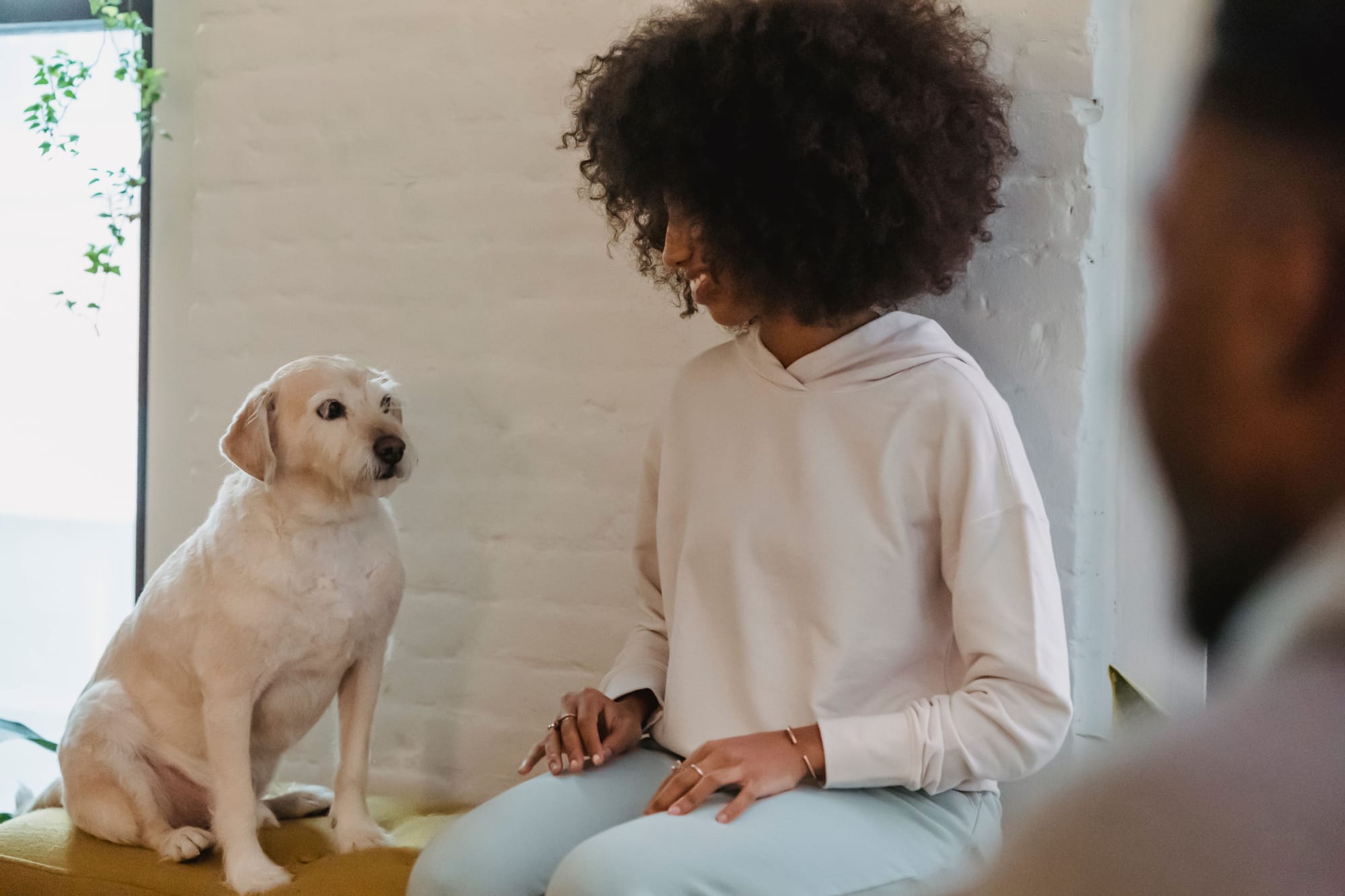
How Our Words Shape Behaviour
The more I talk to Rubi, the more she seems to understand. Not in a party-trick way, but in a genuine everyday sense. She knows "bed," "wait," "come on then," and "where's your ball?" They're small things, but they build a shared language between us.
Something else I've noticed is that the more I talk to her calmly and kindly, the more she checks in with me. She looks back on walks, she settles near me in the evening, and she seems more confident overall. A bit of friendly chatter goes a long way.
When Talking Goes Wrong
It's not always helpful though. I learned this the hard way. One afternoon, I was on the phone to a friend, moaning about something trivial, and Rubi disappeared upstairs. She stayed there until I'd finished. It sounds silly, but I think the sharp, stressed energy in my voice affected her. Now I try to take a breath before a tense phone call and give her a quiet heads-up that everything is fine. It sounds a bit bonkers, but it works for us.
Simple Ways to Talk to Your Dog Today
- Narrate your day. "Right, Rubi, kettle's on, then we'll pop out." It doesn't need to be clever.
- Use a warm, upbeat tone for praise and a calm, low tone for reassurance.
- Say their name gently before a cue so they're ready to listen.
- Pause and let them respond in their own way, even if it's just a wag.
- Keep it relaxed. Dogs don't need a speech, just your company.
A Final Thought
Talking to our dogs isn't just a bit of fun, though it's certainly that. It's how we connect, reassure, and share our lives with them. Rubi has taught me that a few gentle words and a kind voice can change her whole day, and mine too. If you're already chatting away to your dog, keep going. They're listening more than you know.