Quiet Toys for Sensitive Dogs: How to Play Without Stress or Overstimulation
A gentle game of tug, where you let your dog win often, builds confidence without chaos. Hide a few treats ...

If you live with a sensitive dog, you'll know that playtime isn't always straightforward. Rubi, my Cockapoo, is a wonderful little companion, but she's also what I gently call a "delicate soul." A squeaky toy that sends most dogs into a frenzy of joy can send her hiding behind the sofa. A game of fetch in a busy park can leave her wired and worried for hours.
It took me a long time to realise that play should calm her down, not wind her up. Once I started choosing quieter toys and adjusting how we played, everything changed. She became more relaxed, more confident, and actually seemed to enjoy our time together far more.
If your dog is anything like Rubi, this one's for you.
Why Some Dogs Find Play Overwhelming
Not every dog thrives on high-energy games. Sensitive dogs often notice everything. Sounds, movement, and sudden changes can feel like a lot to process. A toy that beeps, flashes, or bounces unpredictably might be fun for a bouncy Labrador, but for a more gentle-natured dog it can feel like a lot of pressure.
Sensitivity can come from many places. Some dogs are naturally more cautious. Others may have had a tricky start in life. And some, like Rubi, are simply wired to notice the world a little more intensely. None of this means they can't enjoy play. It just means we need to play in a way that suits them.
What Makes a Toy "Quiet"?
A quiet toy isn't necessarily silent. It's simply one that doesn't overwhelm the senses. Think soft textures, gentle movement, and predictable sounds.
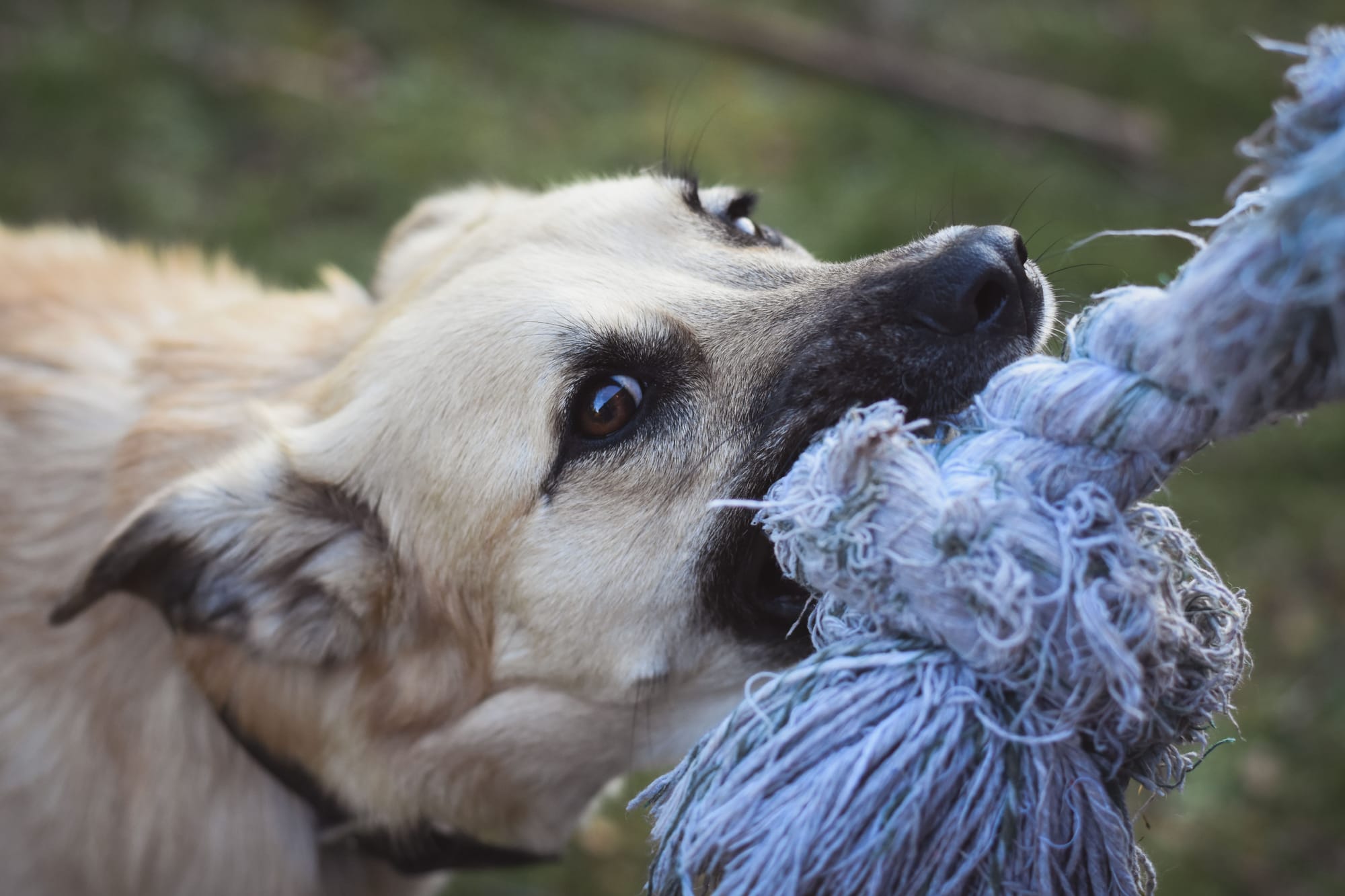
Rubi's favourite is a plain fabric tug toy with no squeaker at all. She also loves a snuffle mat, which lets her use her nose rather than her ears. Soft plush toys she can gently mouth are another winner. The common thread is that none of these toys demand a big reaction. They invite calm, curious engagement instead.
Toys to be cautious with include anything with a loud squeaker, flashing lights, or erratic movement. These aren't bad toys. They're just better suited to dogs who enjoy a bit of chaos.
Playing Without Pressure
How we play matters just as much as what we play with. One of the biggest lessons I learned with Rubi is to let her set the pace.
Start games slowly. Sit on the floor rather than looming over your dog. Offer a toy and wait. If they show interest, great. If they walk away, that's fine too. There's no score to keep.
Short sessions work best. Five gentle minutes of tug or a slow sniff around a snuffle mat is often plenty. Rubi usually lets me know she's done by flopping onto her side with a sigh. I've learned to respect that rather than coaxing her into "just one more go."
Simple Quiet Games to Try
There are plenty of low-key games that sensitive dogs tend to adore.
A gentle game of tug, where you let your dog win often, builds confidence without chaos. Hide a few treats under a towel and let your dog snuffle them out. This taps into natural foraging instincts and feels wonderfully satisfying for them. Rolling a soft ball slowly across the floor, rather than throwing it, keeps things calm and predictable.
Rubi's absolute favourite is what I call "find it." I hide a couple of treats around the living room and simply say "find it." She trots around at her own pace, tail gently wagging. It's the happiest I ever see her.
Reading the Signs
Sensitive dogs are usually very good at telling us how they feel. We just need to listen.
If your dog turns their head away, licks their lips, yawns, or freezes, they're likely feeling a bit overwhelmed. These are gentle requests for a break. Stopping when you see these signs builds trust. Your dog learns that play is safe and that they're in control.
I can't tell you how much Rubi's behaviour changed once I started paying attention to these small signals. She became more willing to engage because she knew I'd stop before things got too much.
A Few Things That Helped Us
Keep toys in a basket and rotate them so nothing feels stale. Play in a quiet room with the TV off if your dog is easily distracted. End every session on a calm, positive note. And never feel guilty about skipping play altogether. A quiet cuddle on the sofa counts for a lot.
If you're ever worried about your dog's anxiety or behaviour, do speak to your vet. They can offer guidance and rule out anything medical.
Final Thoughts
Living with a sensitive dog has taught me so much. It's taught me to slow down, to pay attention, and to find joy in the small, quiet moments. Play doesn't have to be loud or exciting to be meaningful. Sometimes the gentlest games are the ones that bring us closest.
You know your dog better than anyone. Trust that. And enjoy the quiet moments together.