The Hidden World of Animal Empathy: What My Cockapoo Rubi Taught Me About Understanding Feelings
Have you ever noticed how your dog looks at you when you are speaking? They are not just waiting for the word walk or dinner ...

What Exactly Is Empathy in Animals?
When we talk about empathy, we are really talking about the ability to understand and share the feelings of another. For a long time scientists thought this was something only humans could do. But research has shown that many animals, particularly social ones like dogs, display behaviours that look a lot like empathy.
It is not about them having a deep intellectual understanding of our problems. Rubi does not know why I am stressed about work or worried about a family member. But she can read my body language, my tone of voice, and even the subtle changes in my scent when my emotions shift. She responds to those signals in ways that feel caring and connected.
How Dogs Read Our Emotions
The way dogs pick up on our feelings is actually quite remarkable. They watch our faces constantly. Have you ever noticed how your dog looks at you when you are speaking? They are not just waiting for the word walk or dinner. They are reading your expression. Research has shown that dogs can differentiate between happy and angry human faces and they respond differently to each.
They also listen to our voices. Rubi knows the difference between my cheerful voice and my tense voice. When I sound stressed, her ears go back slightly and her body becomes more still. When I sound happy, her tail starts wagging even before I have said anything exciting.
And then there is the sense of smell. Dogs have an incredible ability to detect chemical changes in our bodies. When we are stressed or afraid, our bodies release different hormones and our scent changes. Rubi can literally smell when I am feeling anxious. It is no wonder she seems to know before I have even said a word.
The Science Behind the Connection
There have been some fascinating studies on animal empathy. One well known experiment looked at how dogs respond when their owners cry. The researchers found that dogs were much more likely to approach and comfort a crying person than someone who was humming or talking normally. They did not just approach because they were curious. They approached with submissive behaviours, like licking or nudging gently, which suggests they were trying to offer comfort.
Another study looked at contagious yawning. It might sound silly but yawning is actually linked to empathy in humans and some animals. Dogs have been shown to yawn more in response to their owners yawning than to strangers yawning. This is thought to be a sign of emotional bonding and mirroring.
What I find most comforting about all of this is that it is not just clever science. It is something we can all observe in our own homes. Rubi does not need a laboratory to show me she cares. She shows me every single day with her gentle nudges and her patient company.
Real Life Moments of Animal Empathy
I have a friend who has a cat that she swears knows when she is ill. On days when she has a migraine, the cat will lie on the pillow next to her head and not leave her side. She says the cat does not even ask for food until she gets up. Animals seem to have this sixth sense for when we need a bit of extra gentleness.
My neighbour has an elderly Labrador who has become quite slow and grumpy in his old age. But when her young grandson comes to visit, the dog perks up, wags his tail, and follows the boy around. The dog seems to know that this little person is not like the adults and needs a softer approach. He lets the boy pet him in ways that would have annoyed him with anyone else.
Even Rubi has her moments. There was a time when my partner was going through a really difficult patch and Rubi would not leave his side. She slept on his feet every night. She followed him from room to room. It was almost as if she was saying I am here and you are not alone. It was such a small thing but it meant the world to both of us.
Is It Really Empathy or Something Else?
Now, some people might argue that dogs are not truly empathetic. They might say that Rubi sits with me when I am sad because she has learned that sitting quietly gets her attention or treats. And I can see why someone might think that.
But I think there is something deeper going on. Yes, dogs learn behaviours that get rewarded. But the timing and the tenderness of their responses often go beyond simple conditioning. Rubi does not just comfort me when I am crying. She also acts differently when I am anxious, frustrated, or even just distracted. She seems to be able to sense subtle shifts in my mood and adjust her behaviour accordingly.
And it is not just about seeking rewards. On days when I am sad and Rubi comes to sit with me, I am not rewarding her with treats. I am just sitting there with her. She is not gaining anything except my company. That feels more like genuine care than trained behaviour.
What This Means for Our Relationship with Dogs
Understanding that dogs have this capacity for empathy changes how we think about them. It reminds us that they are not just pets or companions. They are beings with emotional lives of their own. They form attachments to us that are real and meaningful.
This also means we need to be mindful of how we treat them. If Rubi can sense when I am stressed, she can also sense when I am frustrated with her. She knows when I am irritated. And while she forgives me quickly, I try to be aware of my tone and my energy around her.
It works both ways too. If I am calm and relaxed, Rubi is calmer. If I am anxious, she becomes more alert and watchful. Our emotional states are linked in ways I did not fully appreciate before I had her. We influence each other all the time.
A Few Tips for Encouraging This Connection
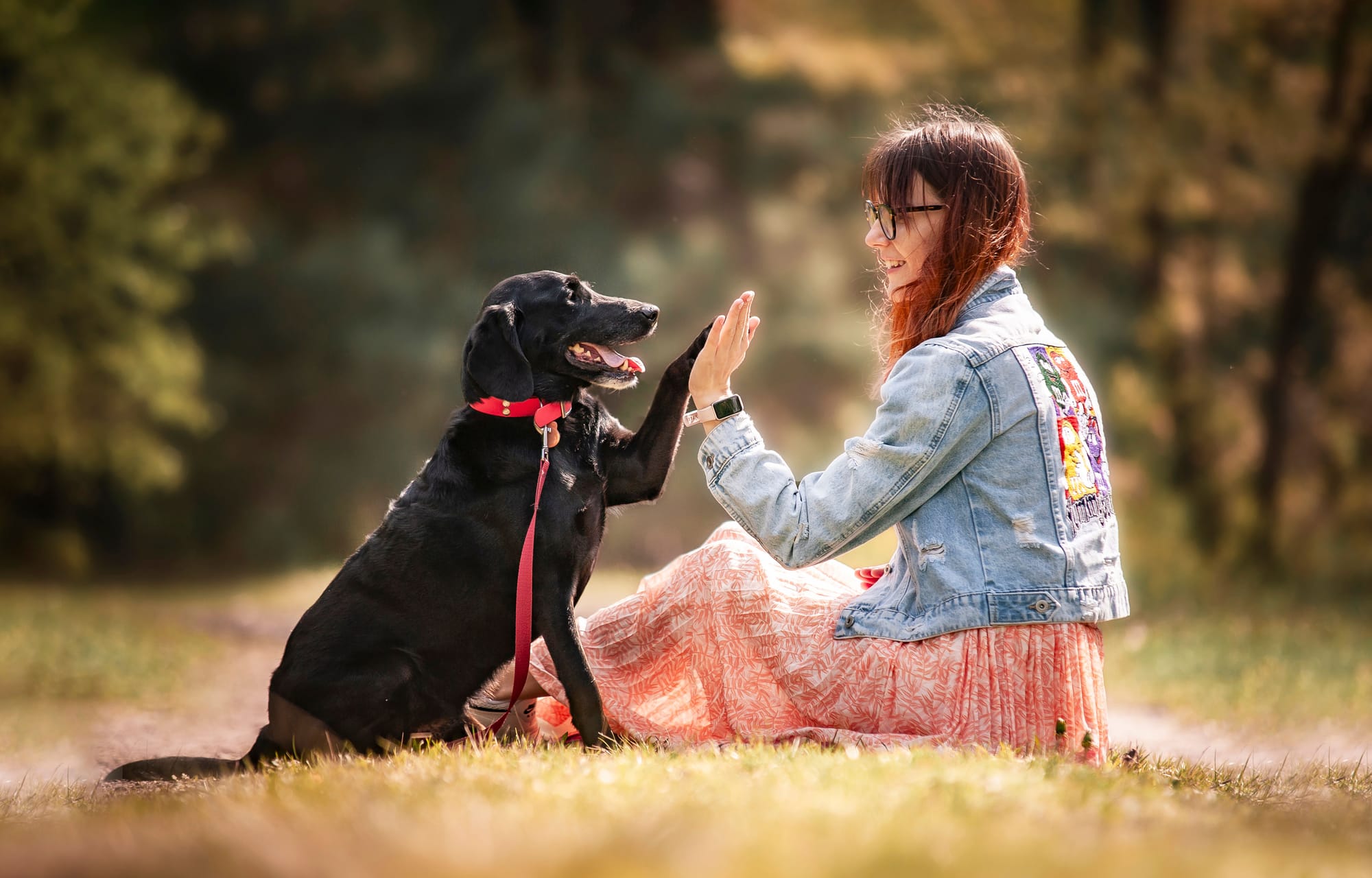
If you want to strengthen the empathetic bond with your own dog, there are a few simple things you can try.
First, pay attention to your dog's body language. Watch how they respond when you are happy, sad, or stressed. You will start to see patterns in their behaviour. This awareness will help you understand their emotional world better too.
Second, try to be consistent with your tone of voice. Dogs respond better to calm, gentle voices than to loud or harsh ones. Even when you are having a bad day, taking a moment to speak softly to your dog can help both of you feel better.
Third, spend time just being present with your dog. Not walking or playing or training. Just sitting together. Quiet time strengthens your bond and gives your dog the chance to read you without distraction.
And finally, trust your instincts. You know your dog better than anyone. If you feel like they are trying to comfort you, they probably are. Dogs are more perceptive than we often give them credit for.
A Final Thought
There is something truly special about sharing your life with an animal that seems to understand you on a deeper level. It does not mean they know every detail of what is going on in your head. But they know you. They know your rhythms and your moods. They know when you need a nuzzle or when you just need quiet.
I have learned so much from Rubi about patience, about presence, and about being kind without expecting anything in return. The hidden world of animal empathy is not really hidden at all. It is right there in front of us, in every wagging tail and gentle lick, in every quiet moment shared on the sofa.
The next time your dog rests their head on your lap or gives you that knowing look, take a moment to appreciate what is happening. You are being seen and understood in a way that is truly special. And that is something worth celebrating.
Empathy in animals calls us to be more compassionate.
A shirt with a modern badge can represent the club's forward momentum. A shirt with a neutral colour can be paired with a wider range of outfits. Readers encountering may be looking for guidance on short-sleeve and long-sleeve options, rather than a simple product description. Taking time to compare fit and fabric can lead to a better purchase decision.
Take care,