The Real Colours in a Dog's Eyes It's Not Just Yellow
I decided to find out a bit more about the real colours in a dog's eyes, and what I discovered is genuinely fascinating ...
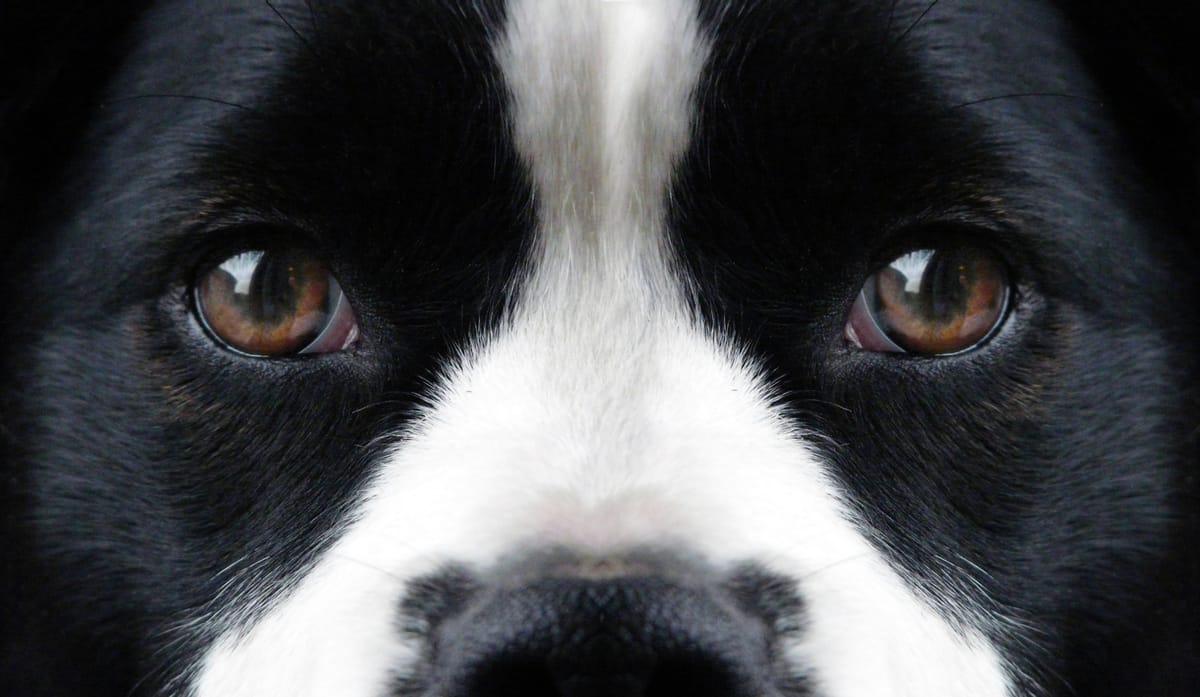
Anyone who shares their home with a dog knows they have a way of making ordinary days better. From the excited greeting at the door to the quiet moments curled up on the sofa, dogs become part of the rhythm of our lives. I often find myself looking into Rubi's big, dark eyes and wondering what she sees when she looks back at me. We've all heard the old myth that dogs see in black and white, and more recently, we've learned they see mostly yellow and blue.
But is that the whole story? I decided to find out a bit more about the real colours in a dog's eyes, and what I discovered is genuinely fascinating.
How Dogs See the World
It turns out that a dog's eye is built a little differently from ours. The part of the eye that detects colour is called the retina, and it's packed with light-sensitive cells called cones. Humans have three types of these cones, which let us see a full spectrum of reds, greens, and blues.
Dogs, on the other hand, only have two types of cones. This means they see the world in a way that's similar to a person with red-green colour blindness. So, that vibrant red ball that stands out so clearly to you and me might look like a dull brownish-grey to Rubi. The beautiful green grass in the park is more of a yellowish hue in her eyes.
Beyond Yellow and Blue
While it's true that dogs are limited in the colour department, saying they only see yellow and blue is a bit of an oversimplification. Their world is more of a muted, pastel version of our own. Imagine a photo with the colours faded and the vibrancy turned down. That's closer to how our dogs experience the world.
They are, however, brilliant at seeing shades of grey. A dog's ability to distinguish between different tones is much better than ours. This is why a light-coloured toy might be easy for them to spot against a dark background, but a red toy on green grass could be surprisingly difficult to find. It's not that they can't see the toy; it's just that the contrast isn't as obvious to them.

So, Why Does It Matter?
Understanding how our dogs see the world is more than just a fun fact. It can actually help us be better owners. When we're choosing toys or setting up a training session, we can make things easier for them.
For example, I used to get a little frustrated when Rubi seemed to lose her red ball in the garden. Now I know it's probably not because she's not trying, but because it blends in with the green grass in her vision. Switching to a blue or yellow toy has made a huge difference. It's a small change that has made playtime much more rewarding for both of us.
A Nose-First World
Of course, we can't talk about how dogs experience the world without mentioning their most powerful sense: smell. While their eyesight might be a bit muted, their sense of smell is their superpower. They don't just see a squirrel in the park; they smell its entire morning. They know where it's been, what it's eaten, and how long ago it was there.
So, while they might not see the world in technicolour, they experience it in a way that's far richer and more detailed than we can ever imagine. Their world is a symphony of scents, sounds, and muted colours, all working together.
A Final Thought
The next time you're out with your dog, watch how they explore. See how they use their nose to guide them. Notice how they react to certain toys or objects based on their shape and contrast rather than their colour.
It's a wonderful reminder that they experience our shared world in their own unique way. And honestly, that just makes me love Rubi even more.