What Your Dog's Sleep Position Really Means, And What It Says About Their Mood
Most sleep positions are perfectly normal and simply reflect your dog's mood, temperature ...

Have you ever watched your dog drift off and wondered what on earth is going on with those legs? I know I have. Rubi, my Cockapoo, has a repertoire of sleep poses that would put a yoga instructor to shame. One minute she's curled into a perfect little doughnut, the next she's sprawled out like she pays the mortgage.
It turns out those positions aren't just adorable. They can tell you quite a lot about how your dog is feeling. So grab a cuppa and let's have a look at what your dog's favourite sleeping spot might be saying.
The Curled-Up Ball
This is the classic. Your dog tucks their nose towards their tail and forms a tidy circle. It's the position wild dogs and wolves often use, and it serves a practical purpose. Curling up conserves body heat and protects the tummy and vital organs.
If your dog sleeps like this regularly, they're probably just keeping cosy. It's especially common in winter or in dogs who feel a bit chilly. It can also suggest a dog who likes a bit of security while they snooze. Rubi does this on frosty mornings, and I can't say I blame her.
The Superhero Spread
Legs stretched out front and back, belly flat to the floor. Some people call this the sphinx position. Dogs who sleep this way are usually ready to spring up at a moment's notice. It's a light doze rather than a deep sleep.
You'll often see this in dogs who are keeping an eye on the household. They're not fully off duty. If your dog does this a lot, they might be a little alert or simply too warm to curl up.
The Belly-Up Bliss
This one always makes me smile. Your dog flops onto their back with all four paws in the air. It looks ridiculous and completely comfortable at the same time.
A dog who sleeps with their belly exposed feels safe in their surroundings. They're not guarding anything, and they trust that nothing bad is going to happen. It's a lovely compliment, really. Rubi saves this one for the sofa when she's well and truly relaxed.
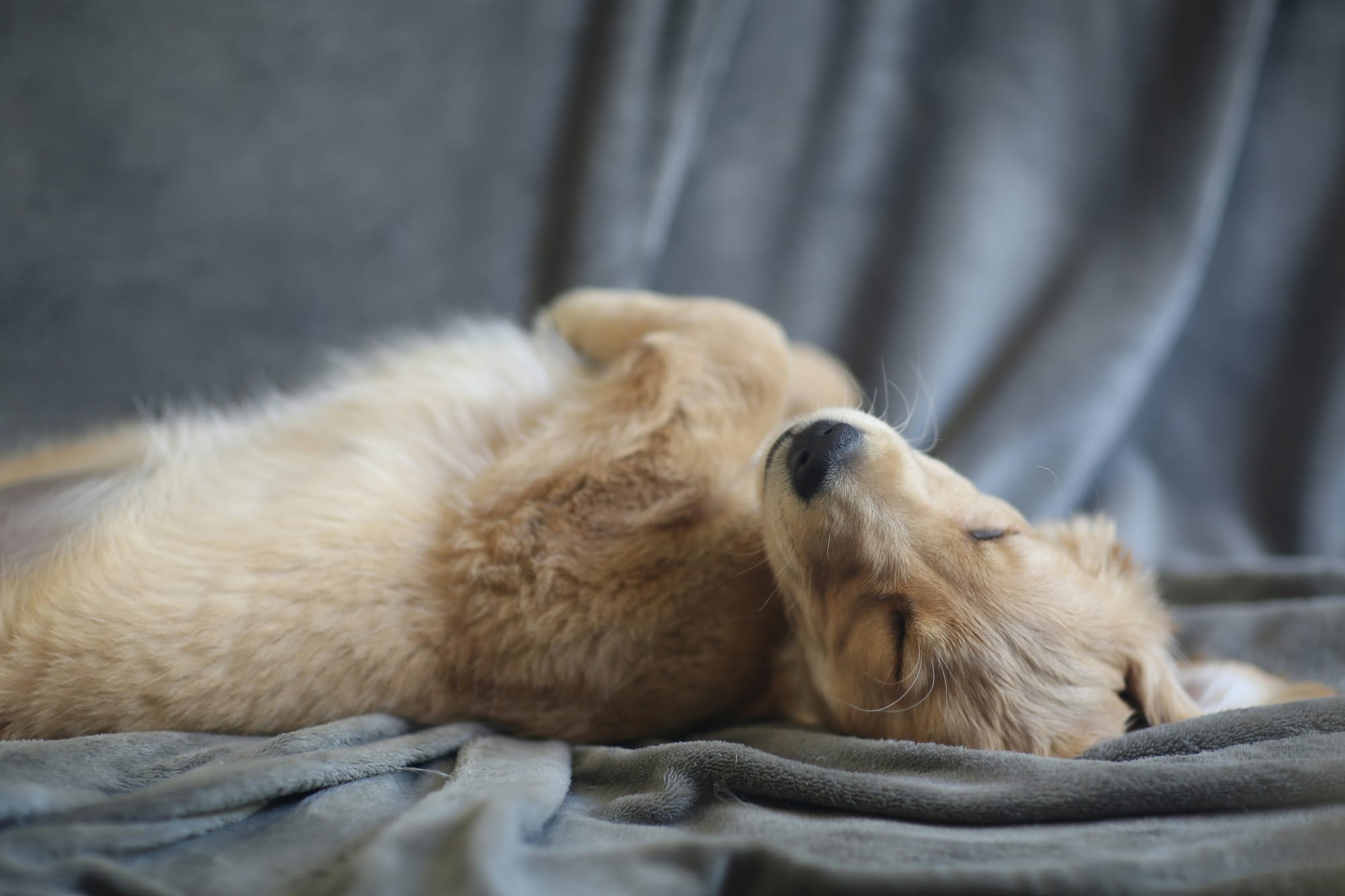
The Side Sleeper
Flat on one side with legs stretched out or gently tucked. This is a sign of deep, proper sleep. Your dog has settled in and isn't planning on moving anytime soon.
Side sleeping is common in dogs who feel completely at ease. It's also a good position for older dogs or those with joint aches, as it takes the pressure off their limbs. If you see your dog snoozing like this, try not to wake them. They're clearly having a lovely time.
The Cuddler
Some dogs simply have to be touching you. They'll press against your leg, rest their head on your foot, or wedge themselves into the smallest gap on the sofa. It's not always about warmth, either.
Dogs who sleep pressed up against their people are showing affection and a strong need for closeness. It's their way of saying you're part of their pack. Rubi does this most evenings, and while it does limit my legroom, I wouldn't have it any other way.
The Back-to-Back
This one sits somewhere between the cuddler and the independent sleeper. Your dog lies with their back against you but faces the other way. It's a lovely balance. They want to be near you, but they're also comfortable enough to settle in their own space.
I've read that this can be a sign of mutual trust. Your dog feels safe with you at their back, and they're happy to let you share their spot without needing to face you.
What About the Twitching and Paddling?
You might notice your dog's legs moving or their paws twitching while they sleep. This is usually perfectly normal. Dogs dream, just like we do. They might be chasing squirrels or reliving a good walk.
If the twitching is gentle, leave them be. If they seem distressed or are thrashing about, it's worth gently waking them and checking they're alright. It's rare, but some dogs have nightmares.
A Quick Note on Changes
Sleep positions can shift with the seasons, your dog's age, or how they're feeling. A dog who suddenly changes their usual position might be experiencing discomfort. If your dog starts sleeping in a way that seems odd for them, or if they seem restless, it's always worth a chat with your vet. I'm not a professional, but I know my girl well enough to spot when something's off.
So What Does It All Mean?
Honestly, the biggest takeaway is this. Most sleep positions are perfectly normal and simply reflect your dog's mood, temperature, or level of comfort. A curled-up dog is keeping warm. A belly-up dog is feeling safe. A cuddly dog wants to be close to you.
The best thing you can do is learn your dog's usual habits. That way, you'll notice if something changes. And if you ever have concerns, your vet is the person to ask.
In the meantime, enjoy those funny little poses. There's something deeply comforting about watching your dog sleep peacefully. It means they feel at home, and that's a lovely thing to give them.
Does your dog have a favourite sleeping position? Rubi is firmly team belly-up these days, and I suspect it's because she knows she's got the run of the place. I'd love to hear about yours.