What's Your Dog Really Saying? The Secret Language of Canine Communication
The thing is, dogs don't use words. They use their whole bodies. And once you start paying attention, you realise ...

Anyone who shares their home with a dog knows they have a way of making their feelings known. Whether it's Rubi giving me that sideways look when I'm late with her dinner or the full-body wag when I pick up her lead, dogs are constantly talking to us. We just need to learn how to listen.
The thing is, dogs don't use words. They use their whole bodies. And once you start paying attention, you realise they're saying an awful lot.
The Tail Tells a Story
Most of us know that a wagging tail means a happy dog, but it's not quite that simple. The height of the tail, the speed of the wag, and even which direction it's going all carry meaning.
Rubi carries her tail at a lovely relaxed level when she's content. When she's really excited, it goes up and wags in fast, tight circles. I've noticed she does this particularly when my partner comes home from work. But when she meets a new dog, her tail goes up stiffly and moves in a slower, more deliberate way. That's her saying "hello, I'm here, let's figure this out."
A tail tucked between the legs is a clear sign of fear or submission. If you see this, your dog is feeling uncertain or worried. Low, slow wags can mean insecurity too. It's worth watching the whole picture rather than just the tail alone.
Ears and Eyes: The Details Matter
Dogs have incredibly expressive ears. Rubi's ears are floppy, which makes them a bit harder to read, but I've learned to watch their position. When they're relaxed and hanging naturally, she's calm. When she tips them forward, something has caught her attention. Pulled back against her head? That usually means she's feeling anxious or submissive.
The eyes are equally telling. Soft, relaxed eyes with a gentle blink mean your dog is comfortable. Hard staring or a fixed gaze is different. It can be a sign of aggression or intense focus. You'll often see this in dogs who are guarding something.
One of the sweetest expressions is what I call the soft eye. Rubi gives me this look when we're curled up on the sofa. Her eyes are slightly squinty and relaxed. It's her way of saying she feels safe and loved.
What Their Mouths Are Telling You
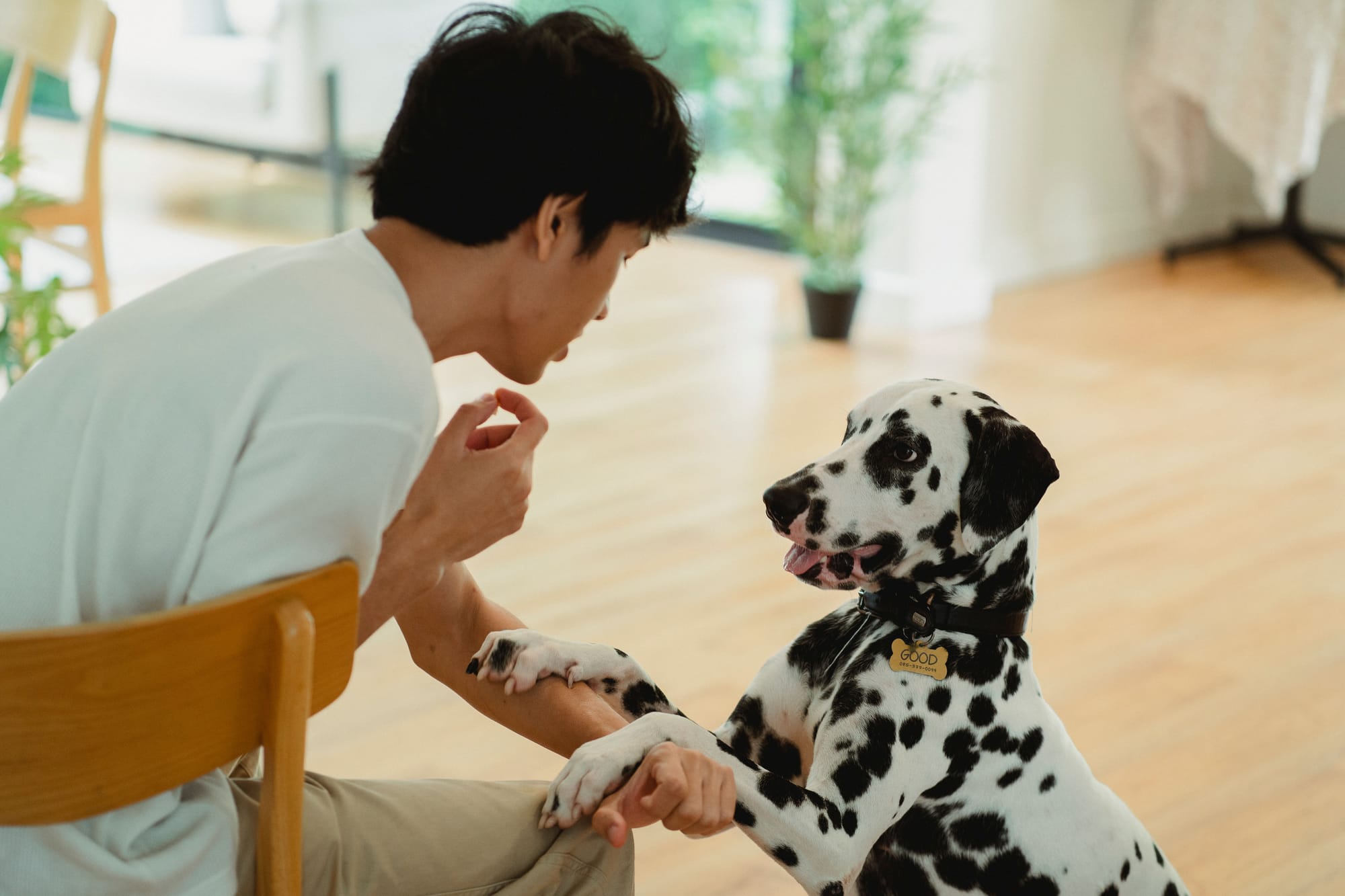
A dog's mouth gives away so much. A relaxed, slightly open mouth with a lolling tongue is the classic happy dog. This is what you see when they're playing or enjoying a walk.
But a closed mouth with tension around the lips can mean they're stressed. If your dog is yawning when they're not tired, that's often a stress signal. Lip licking that isn't related to food is another one. I used to think Rubi was just being funny when she'd lick her lips during new situations, but I've learned it's her way of telling me she's a bit uneasy.
Snarling and showing teeth is obviously a warning. But there's also the play bow. You know the one. Front legs down, bottom in the air, tail wagging. This is your dog saying "I'm playing, this is all fun, let's go!"
Vocalisations: More Than Just Barks
Barking gets the most attention, but dogs make all sorts of sounds. Rubi has a specific bark for when someone's at the door. It's sharp and alert. She has another for when she's playing. That one is higher and more repetitive.
Whining is often a sign of frustration or excitement. It can also mean they want something. Rubi whines by the back door when she needs to go out. I've learned to tell the difference between that whine and the one she does when she wants my toast crust.
Growling is a warning. And I think it's really important to say that punishing a dog for growling isn't helpful. They're giving you information. They're saying they're uncomfortable. If you take away the growl, you take away the warning, and that's when bites happen without notice.
Scent: The Hidden Language
We often forget that dogs experience the world through their noses. Their sense of smell is thousands of times better than ours. When dogs meet, they sniff each other. It's their version of a handshake. They're reading all sorts of information. Age, gender, health, mood.
Rubi sniffs everything on our walks. Every lamppost, every patch of grass. She's reading the local news. I used to get impatient, but I've learned to let her take her time. This is how dogs communicate with each other when we're not around.
How to Read Your Own Dog Better
The best way to understand your dog is to watch them when nothing much is happening. Get to know what they look like when they're completely relaxed. Then you'll spot the differences when they're not.
Pay attention to context too. A wagging tail during play is friendly. The same wag while your dog is staring at another dog might be something else entirely.
And trust your instincts. If you think your dog seems anxious or uncomfortable, they probably are.
The secret to canine communication isn't really a secret at all. It's about paying attention. It's about realising that your dog is constantly trying to talk to you. They're using their whole body, their voice, their nose. They're telling you how they feel and what they need.
Once you start listening, you'll wonder how you missed it all this time.
Rubi and I have been learning each other's language for years now. And I'm still discovering new things. That's the joy of it. Every day, there's something new to understand about each other.