Why Does My Dog Wag Their Tail? (It's Not Always What You Think)
The tail itself isn't the whole story. It’s the position, the speed, and the direction that give you the real clues ...

Anyone who shares their home with a dog knows there is nothing quite like the greeting you get when you walk through the door. The enthusiastic wiggles, the happy spins, and of course, that thumping tail wagging so hard their whole back end seems to join in. Rubi, my Cockapoo, has a tail that seems to have a life of its own. It's her personal happiness indicator, or so I always thought.
But I've been doing a bit of reading lately, and it turns out that a wagging tail isn't always a simple sign of a happy dog. It's actually a lot more like a complex language. And once you start to learn it, you realise your dog has been trying to tell you things all along. Let's have a look at what that wag really means.
It's All About Arousal, Not Just Happiness
Here is the main thing I learned: a wagging tail simply means a dog is emotionally aroused . Now, before you panic, "arousal" doesn't just mean the exciting kind. It just means something has sparked a reaction. This could be happiness and excitement, but it could also be anxiety, frustration, or even aggression .
So, if you see a dog wagging its tail, you shouldn't assume it's an invitation to run over and say hello. This is especially important with dogs you don't know. Misreading a wag can lead to a nip or a bite, which is something we all want to avoid . The tail itself isn't the whole story. It’s the position, the speed, and the direction that give you the real clues.
Decoding Your Dog's Tail Dictionary
So, what are the different types of wags saying? Here is a quick guide I have found helpful.
The Classic Happy Wag
This is the one we all know and love. Usually, the tail is held in a neutral position for that breed (for Rubi, that's slightly above her back) and is wagging in broad, sweeping, side-to-side motions . If the whole back end is wiggling and the dog has a relaxed, open-mouthed smile, you are looking at one happy pup .
The "Oh My Goodness, I'm So Excited!" Wag
You'll know this one when you see it. Sometimes called the "helicopter tail," the tail goes around in a full circle like a propeller . I've definitely seen Rubi do this when my partner comes home from work or when I pick up her lead for a walk. It's a sign of pure, unadulterated joy.
The High and Stiff Wag
This is the one to be careful of. A tail held high, almost like a flag, and wagging very quickly and stiffly can indicate a dog is feeling confident and alert, but not necessarily in a friendly way . If the dog's body is also tense and stiff, it could be a warning sign that they feel threatened or aggressive . It's the dog equivalent of saying, "Back off."
The Nervous Wag
A tail that's held low or tucked between the legs, even if it's wagging, is a sign of fear, anxiety, or submission . It might be a slow, hesitant little wag. This is a dog that is feeling insecure and uncomfortable, and the best thing to do is give them some space . Rubi sometimes does this if she hears a loud, unfamiliar noise.
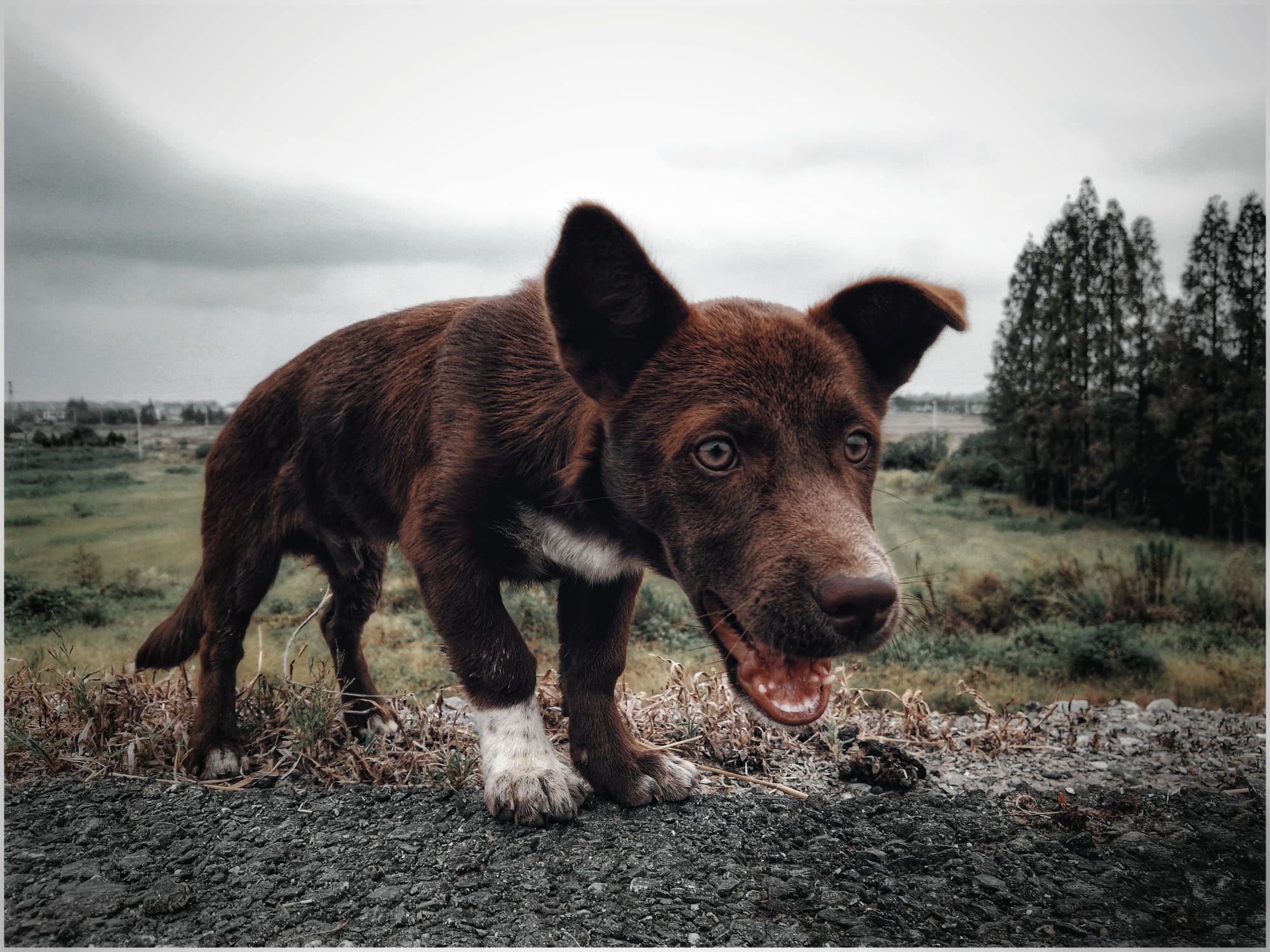
The Curious Wag
Has your dog ever spotted something interesting and held their tail straight out, giving a few little, quick wags? That's a sign of curiosity and interest. They are trying to figure something out .
Left or Right? The Direction Matters Too
Isn't it fascinating how much detail there is? I read that scientists have found the direction of the wag also matters. Research suggests dogs will wag their tails more to the right when they are feeling positive and happy, and more to the left when they are feeling negative or anxious . It's linked to which side of the brain is most active.
Why Do Dogs Wag Their Tails in the First Place?
While we are learning to understand what different wags mean, it is also interesting to think about why they do it at all. One interesting theory is that we humans played a big part.
Domestic dogs wag their tails far more often than wolves, their wild ancestors . Some scientists think that during domestication, humans might have unknowingly preferred dogs that wagged their tails more, maybe because we are drawn to rhythmic patterns . So, essentially, over thousands of years, we helped turn tail-wagging into the major form of communication it is today because we liked the look of it.
Be a Tail Detective
The most important thing I've realised is that you can't just look at the tail. You have to look at the whole picture. What is the dog's body doing? Is it relaxed and wiggly, or stiff and tense? What are their ears and eyes doing? What is happening in the environment?
A shirt with a simple pattern can be understated yet stylish. A shirt with a simple design is easy to style. A balanced discussion of can cover adult, youth and gift-buying needs while keeping the advice relevant to different buyers. The shirt's colour can influence how often it is worn, with darker colours being more forgiving.
By paying attention to all of these things, we can get a much better idea of how our dogs are really feeling. It’s helped me understand Rubi so much better, and I hope it helps you get to know your own pup a little more, too.