Why Play Matters: How Toys Help Dogs Grow and Build Trust With Humans
Play isn't just a bit of fun for our dogs. It's how they learn, how they grow, and how they build trust with us ...

Anyone who shares their home with a dog knows they have a way of making ordinary days better. From the excited greeting at the door to the quiet moments curled up on the sofa, dogs become part of the rhythm of our lives.
But there's something else going on beneath all that tail wagging and squeaky toy madness. Play isn't just a bit of fun for our dogs. It's how they learn, how they grow, and how they build trust with us. I've seen it firsthand with Rubi, my Cockapoo. She's taught me more about the power of play than any book ever could.
Play Is How Dogs Learn About the World
When Rubi was a puppy, she explored everything with her mouth. Toys were her first teachers. A soft chew toy showed her what was okay to bite. A puzzle feeder kept her brain busy and stopped her from chewing the furniture. It wasn't just entertainment. It was education.
Puppies use play to practise skills they'll need as adult dogs. Chasing a ball builds coordination. Tugging on a rope strengthens their jaws and teaches them to control their bite. Even a simple game of fetch teaches patience and impulse control. They're learning without even realising it.
Toys Build Confidence
Some dogs are naturally bold. Others need a bit more encouragement. Rubi falls somewhere in the middle. I noticed early on that she was unsure about new sounds and spaces. A squeaky toy changed that. The noise was hers to control. She'd squeak it, pause, then squeak it again. That tiny bit of control gave her confidence.
Interactive toys can do the same. A treat ball that rolls and drops kibble rewards curiosity. A soft plush toy gives a nervous dog something comforting to carry around. These small wins add up. A confident dog is a happier dog, and toys are often the gentle push they need.
Play Strengthens the Bond Between You and Your Dog
This is the part I love most. Play isn't just good for dogs. It's good for us too. When you get down on the floor and wave a flirt pole or toss a ball, you're speaking your dog's language. You're saying, "I see you. I enjoy being with you."
Rubi and I have a little routine. Every evening, we have ten minutes of tug. She brings me her rope, I grab one end, and we both growl and pull. It sounds silly, but it's our thing. She trusts me to stop when she's had enough. I trust her not to accidentally catch my hand. That trust didn't happen overnight. It was built one game at a time.
Different Toys for Different Needs
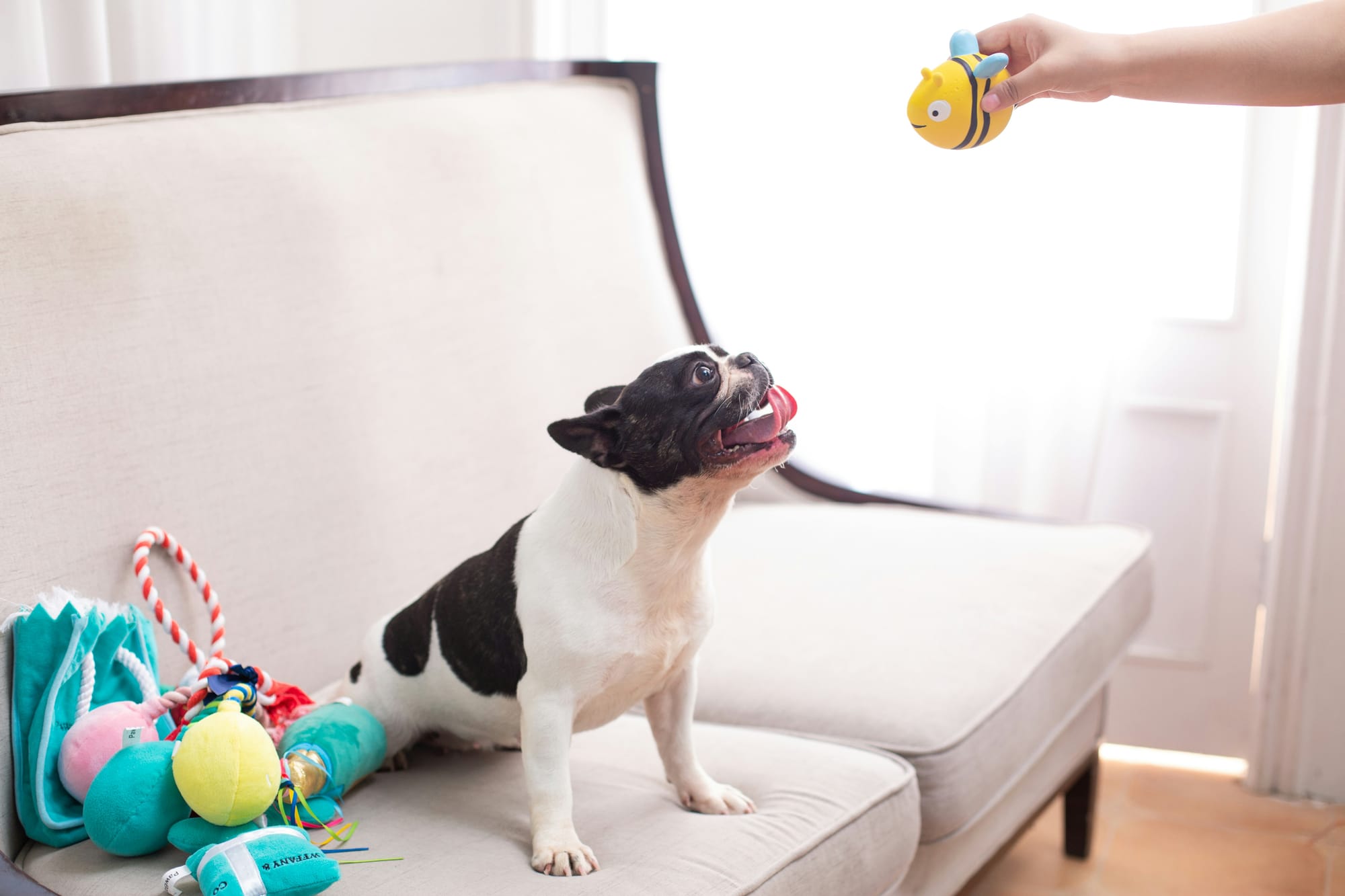
Not every toy suits every dog. Rubi ignores most squeaky balls, but she'll do anything for a soft duck. Here's a rough guide to what different toys can offer.
Chew toys. Great for stress relief and dental health. They keep bored dogs from turning to your shoes.
Puzzle toys. Perfect for clever dogs who need a job to do. They slow down fast eaters and tire out busy brains.
Tug toys. Brilliant for interactive play. They teach impulse control and give you a fun way to bond.
Fetch toys. Ideal for dogs who love to run. They burn energy and satisfy that chase instinct.
Comfort toys. Soft and cuddly. Some dogs carry them around like a security blanket. Rubi has a little rabbit she's had since she was eight weeks old.
A Few Tips From One Dog Lover to Another
Rotate your dog's toys. Keep a few out and put the rest away. Swap them every week or so. It keeps things fresh and stops your dog getting bored.
Supervise play. No toy is indestructible. If a toy starts falling apart, bin it. A swallowed squeaker is not a fun vet visit.
Follow your dog's lead. Some days Rubi wants to chase. Other days she just wants to chew beside me on the sofa. That's fine. Play should never feel like a chore for either of you.
Keep sessions short. Five to fifteen minutes is plenty for most dogs. Little and often beats one long, tiring session.
Play Is a Language of Love
When I watch Rubi zoom around the garden with her favourite toy, ears flopping and tail going like a helicopter, I'm reminded of something simple. Dogs don't need fancy gadgets or expensive beds. They need us. They need our time, our attention, and a bit of playful silliness.
Toys are the tools. Play is the language. Trust is the reward. And honestly, I think we get just as much out of it as they do.
So go on. Grab that rope. Toss that ball. Your dog is waiting.