Why Some Dogs Are Fearful and How You Can Help
Every dog feels frightened sometimes. It's a survival instinct, not a personality flaw. A sudden loud noise

Have you ever watched your dog shrink back at a bin bag flapping in the wind, or tuck their tail when a stranger reaches out a hand? I know I have. Rubi once spent a full ten minutes barking at a garden gnome that hadn't moved an inch. Looking back, it was funny. At the time, I felt awful for her. Fear in dogs is one of those things that's easy to misread, and even easier to accidentally make worse. So let's talk about it properly.
Fear Is Normal, Up to a Point
Every dog feels frightened sometimes. It's a survival instinct, not a personality flaw. A sudden loud noise, a strange person in a hat, a new piece of furniture in the hallway. All of these can trigger a perfectly reasonable "what on earth is that?" response. The trouble starts when fear becomes the default setting, rather than an occasional reaction.
Common Reasons Dogs Become Fearful
There's rarely one single cause. More often, it's a mix of things.
- Lack of early socialisation. Puppies who don't meet a wide range of people, sounds and environments during their first few months tend to find the world scarier later on. Rubi met a hoover at nine weeks old and still isn't convinced.
- A frightening experience. One bad encounter with a bigger dog can leave a lasting impression. Dogs remember.
- Genetics. Some dogs are simply born more cautious. It's not your fault, and it's not theirs either.
- Changes at home. A move, a new baby, a lost companion. Dogs notice everything, even when we think they don't.
- Pain or illness. Sometimes fear is the first sign something's physically wrong. Worth a vet visit if the behaviour appears out of nowhere.
What Fear Looks Like
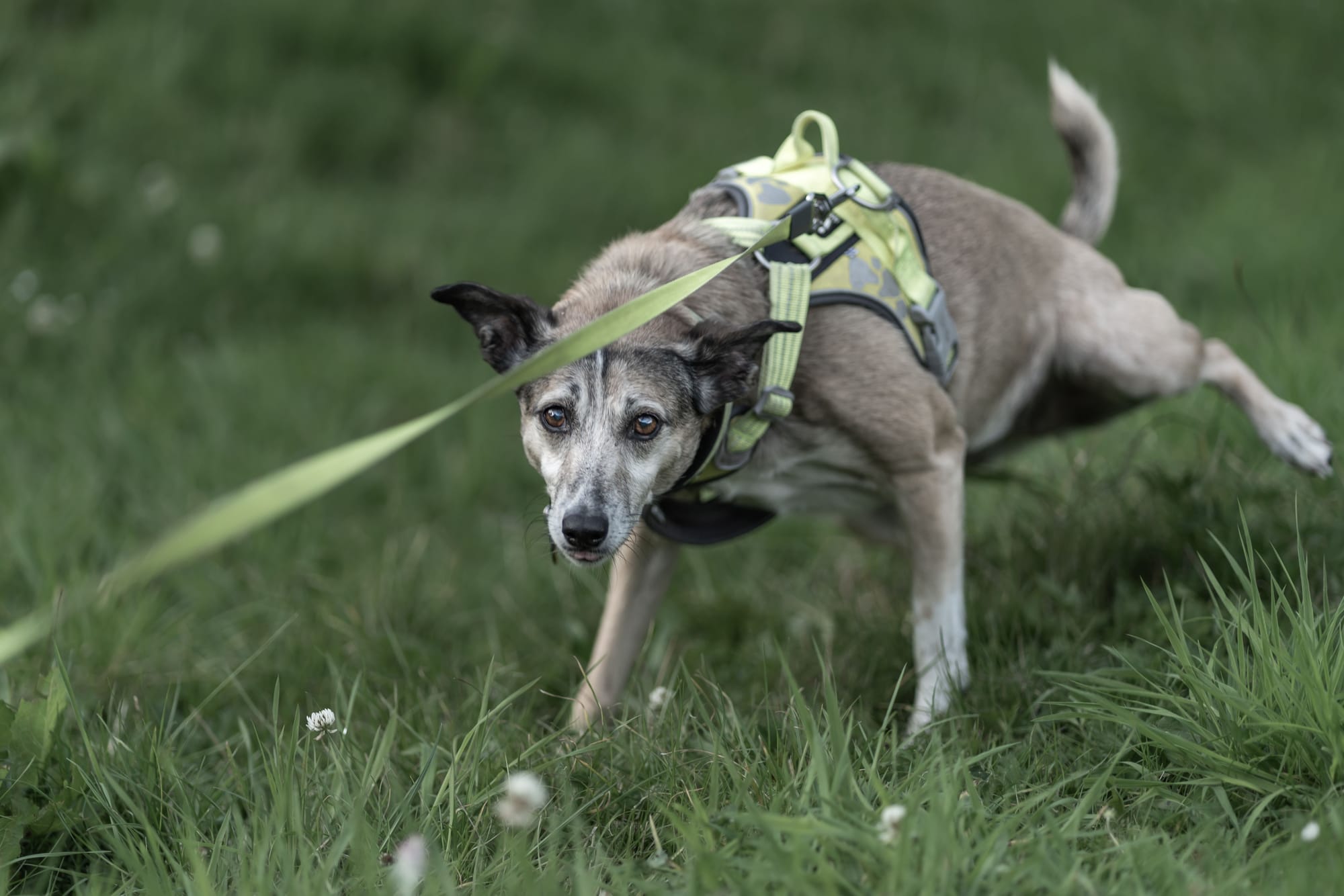
It's not always trembling and hiding. Fear can show up as barking, growling, excessive panting, lip licking, yawning, or a sudden refusal to walk. I once mistook Rubi's frantic tail chasing for excitement. It was actually stress. Learning to read the quieter signals has made a huge difference.
Practical Things You Can Do
First, don't force it. Pushing a frightened dog towards the thing that scares them usually backfires. Instead, let them approach at their own pace, and reward calm behaviour with treats and praise. Keep sessions short and positive.
Second, give them a safe space. A crate with a blanket over it, a quiet corner, a favourite bed. Somewhere they can retreat to without being followed.
Third, stay calm yourself. Dogs pick up on our tension. If you're gripping the lead and holding your breath, they'll assume there's something to worry about.
Fourth, consider a gentle behaviourist if things don't improve. There's no shame in asking for help. I wish I'd done it sooner with Rubi's lead reactivity.
A Few Key Takeaways
- Fear is normal, but constant fear isn't something to ignore.
- Socialisation, patience and calm consistency make a real difference.
- Never punish a fearful dog. It confirms their worst suspicions.
- Speak to your vet if the behaviour is sudden or severe.
Final Thoughts
Living with a fearful dog can feel heartbreaking at times. You want the world to be kind to them, and it isn't always. But small, steady steps add up. Rubi still isn't a fan of the hoover. She is, however, much braver than she was two years ago, and that's down to patience, treats, and a lot of sitting quietly together on the kitchen floor. Your dog can get there too. One calm day at a time.