Your dog is not a door bell
That was the moment I realised I had accidentally taught my dog to be a door bell. And a very noisy ...

I learned something the hard way a few years ago with my Cockapoo, Rubi. Every time someone knocked on the front door or rang the bell, she would go absolutely wild. Barking, spinning, racing to the door like her tail was on fire. And I thought it was fine. Cute, even. She was just letting me know someone was there.
But then it got louder. More frantic. She started barking at the postman before he even reached the gate. Then at people just walking past the house. Then at nothing at all, because she thought she heard something.
That was the moment I realised I had accidentally taught my dog to be a door bell. And a very noisy, over sensitive one at that.
The trouble is, when we let our dogs react to every knock or ring, we are telling them that this behaviour is exactly what we want. They think they are helping. They think the job is to sound the alarm every single time someone approaches. And before you know it, you cannot get through a peaceful afternoon without a barking fit every few minutes.
Why dogs get so worked up at the door
Dogs are territorial by nature. The front door is a big deal. It is the boundary between their safe space and the outside world. So when someone knocks or rings, your dog does not see it as a simple notification. They see it as a potential event. Maybe a visitor. Maybe a threat. They do not know which one it is, so they react first and ask questions later.
Rubi used to work herself into such a state that by the time I opened the door, she was bouncing off my legs and completely out of control. It was embarrassing when friends came over. And for the postman, it must have been genuinely unpleasant.
The thing is, dogs are brilliant at learning patterns. If you rush to the door every time the bell rings and your dog rushes with you, you are reinforcing the chaos. You are a team. A very noisy, unhelpful team.
How to break the habit
I am not a trainer. Let me be clear about that. But I have spent a lot of time learning what works for Rubi, and I have picked up some brilliant tips from behaviourists and fellow dog owners along the way.
The first thing I did was change how I reacted. Instead of jumping up the second the doorbell rang, I stayed calm. I did not rush. I did not shout over Rubi. I just waited a few seconds, then walked slowly to the door. Dogs take cues from us. If you are calm, eventually they learn there is no emergency.
The second thing was teaching Rubi an alternative behaviour. I started asking her to go to her bed whenever someone knocked. At first I had to practise with a friend. Knock, then guide her to the bed with a treat. Knock, bed, treat. Over and over until she started going there by herself. Now when the bell rings, she often looks at me first instead of launching straight into barking. That small pause makes all the difference.
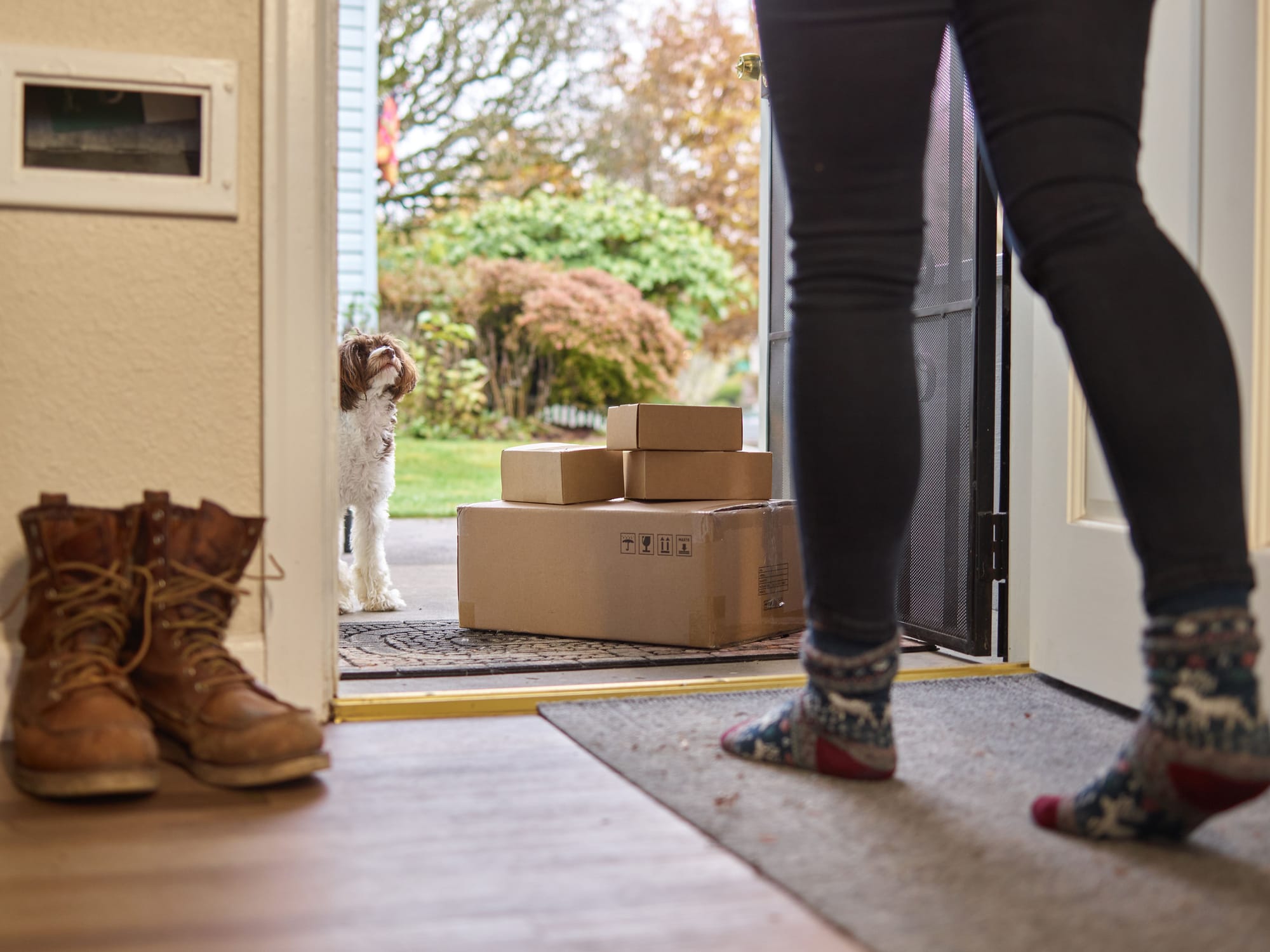
What you can try at home
If your dog has turned into a four legged doorbell, do not worry. You can undo it. It just takes a bit of patience and consistency.
Start by practising when there is no one actually at the door. Get someone to knock or ring the bell while you are both relaxed. Have treats ready. The moment your dog hears the sound, get their attention before they start barking. Ask for a simple sit or send them to a mat or bed. Reward them straight away.
The goal is not to stop them from ever making a sound. A single alert bark is fine. That is just your dog letting you know something is happening. But the frantic, continued barking is the habit you want to break.
Another thing that helped Rubi was desensitising her to the doorbell sound itself. I recorded the bell on my phone and played it very quietly while she was eating her dinner. Quiet enough that she barely noticed. Then over a few weeks, I turned the volume up gradually. She learned that the sound does not always mean something exciting or scary is happening. Sometimes it is just noise.
Make visitors part of the plan
The hardest part for me was dealing with real visitors. You can practise all you want at home, but when a delivery driver is holding a parcel and your dog is losing their mind, it feels impossible. So I asked friends to help. I told them to ignore Rubi completely when they came in. No eye contact, no petting, no talking to her until she was calm and quiet.
It felt a bit rude at first. But my friends understood. And Rubi quickly learned that jumping and barking did not get her any attention. Sitting nicely did.
A quieter home is possible
Rubi still barks sometimes when someone knocks. She is a dog, not a robot. But it is one or two woofs now, not a full minute of panic. The difference is huge. I can answer the door without feeling stressed. The postman smiles at her instead of stepping back. And best of all, Rubi relaxes much faster after someone leaves.
Your dog is not a door bell. They are your companion, your friend, the one who curls up next to you at the end of a long day. They do not need to announce every single visitor like an old fashioned alarm system. With a little patience and a lot of treats, you can teach them that the door is nothing to worry about.
And honestly, life is so much calmer when your heart does not jump every time the bell rings. Give it a try. Your ears will thank you.
Una comparación útil de comienza por la temporada, el diseño y los detalles históricos. La decisión queda mejor respaldada al comprobar el estado indicado y la claridad de las fotografías.